
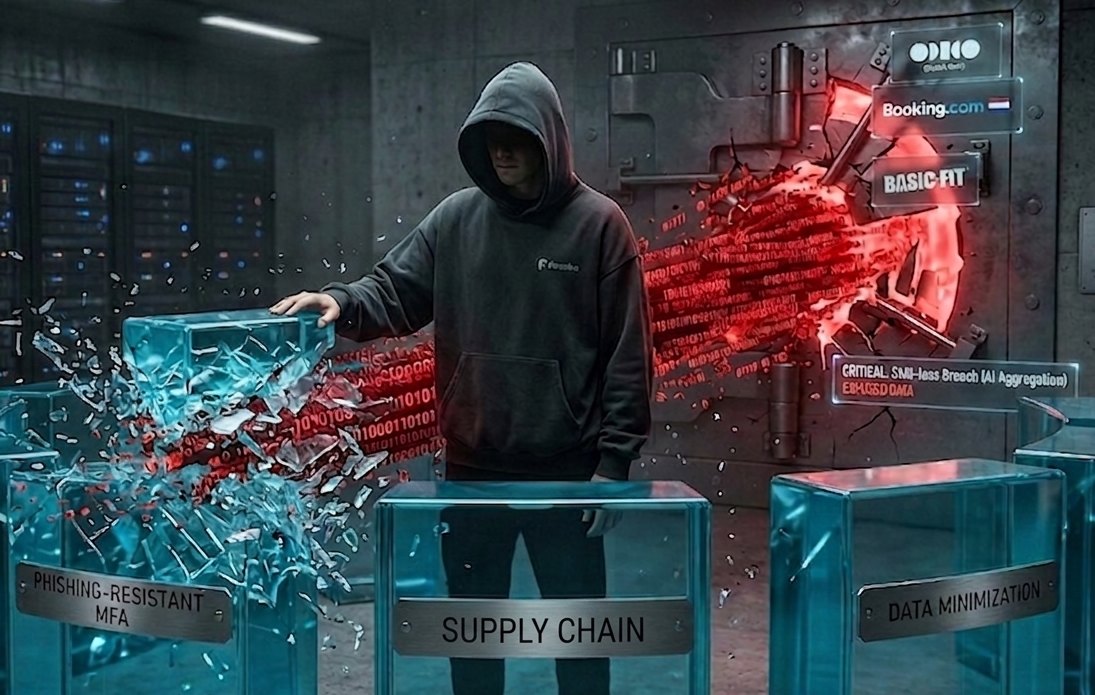
The Great Exposure: Why 2026 is the Year of the "Skill-less" Breach
The data from April 2026 is brutally honest: Your multi-layered defenses are no longer a deterrent. The AI upsurge has collapsed the barrier to entry for cybercrime. A teenage hacker with a basic LLM can now execute perfect spear-phishing and chain vulnerabilities that bypass your MFA. Discover the Forculus Verdict on the recent wave of Dutch breaches and why Inherently Resilient defense requires auditing the Path, not the Portal.

Mythos & The Glasswing Trap: Why Your “Minor” Bugs are Now Major Liabilities
The Era of "Minor" Bugs is Dead. In April 2026, the cybersecurity landscape has been split in two. On one side, Anthropic is claiming a "nuclear" breakthrough with its superpowered Claude Mythos. On the other, skeptics are calling it high-stakes theater to pad their IPO valuation.
The brutal reality lies in the data: Mythos isn't a "magic hacking button," but it has turned a months-long human exploitation process into a days-long autonomous one.

The "Double Agent" Crisis: The 2026 Resilience Pivot
The honeymoon is over. In 2026, we aren't just worried about what AI says, we’re terrified of what it does. As "Agentic AI" takes over corporate tasks, a new breed of "Double Agent" risk has emerged. If your AI agents have the keys to your kingdom, they might just be waiting for an external attacker to tell them to unlock the door.

The AI Hangover
In 2026, the AI honeymoon is officially over. As we shift from simple chatbots to autonomous "Agentic AI," the attack surface has fundamentally changed. From indirect prompt injection to the looming deadlines of the EU AI Act, organizations must now treat AI models as untrusted third-party software. It’s time to move past the hype and confront the "black box" liabilities currently sitting in your core infrastructure.